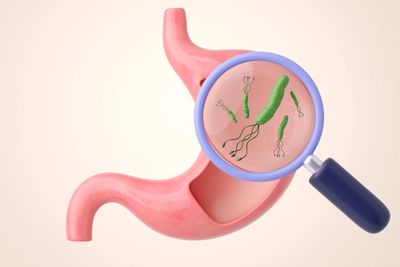
Is there a natural treatment for H. pylori ?
Increasing antibiotic resistance highlights the need to explore natural therapies.
Helicobacter pylori, commonly known as H. pylori, is a spiral-shaped bacterium that can live in the stomach lining. It is one of the most common chronic infections worldwide, with estimates suggesting that around half of the global population carries it, although prevalence varies greatly between countries.
H. pylori is unusual because it can survive in the highly acidic environment of the stomach. It does this mainly by producing an enzyme called urease, which neutralises acid in its immediate surroundings, allowing the bacterium to burrow into and colonise the protective mucus layer lining the stomach.
Common symptoms may include upper abdominal pain or burning, nausea, bloating, burping, early fullness, reduced appetite and indigestion. H. pylori is strongly linked with chronic gastritis, stomach and duodenal ulcers, and it is also a recognised risk factor for gastric cancer.
Interestingly, many people carrying H. pylori never develop symptoms or any associated diseases. One reason may be that not all H. pylori strains behave in the same way. Some carry more potent virulence factors, such as CagA and VacA, which are associated with greater inflammation and a higher risk of peptic ulcers, atrophic gastritis and gastric cancer.
Another interesting fact is that H. pylori may sometimes play a positive role: Some research suggests an inverse association between H. pylori and reflux-related conditions such as GORD/GERD, Barrett’s oesophagus and oesophageal adenocarcinoma, which make sense because H. pylori creates less acidic environment in the stomach.
Several studies have also found that children and young adults carrying H. pylori are less likely to develop asthma, allergic rhinitis (hay fever) or eczema.
This possible positive interaction between host and H. pylori however does not mean H. pylori should be ignored, but it does highlight that the relationship between this bacterium and human health is complex, and as always we are still learning.
How is H. pylori detected?
The most common test your GP will request is an antigen stool test, while the urea breath test is used less frequently and is more commonly requested by practitioners such as nutritional therapists and gastroenterologists.
Stool PCR test can also be used to confirm virulence factors. If PCR stool test is used, it is often recommended to confirm active infection with a urea breath test or stool antigen test before deciding on treatment.
Testing can be affected by medication. Proton pump inhibitors, bismuth (e.g. Pepto bismol) and antibiotics can cause false-negative results.
Conventional treatment
Conventional treatment usually involves a combination of acid suppression (e.g. omeprazole) and antibiotics.
Treatment effectiveness has dropped over time. When PPI-based triple therapy was introduced, eradication rates were around 90%, but studies now report that rates have fallen to less than 60%, largely because of antibiotic resistance.
Triple antibiotic treatment is also associatied with many side effects, and dramatic changes in microbiome.
Natural and integrative support
Increasing antibiotic resistance and dropping eradication rate are obvious reasons for the search for natural therapies that could be used in those with H. pylori associated symptoms.
Natural approaches may be used either as part of a eradication plan or alongside conventional treatment to improve tolerance and outcomes.
The evidence varies depending on intervention used, and treatment should be personalised, especially where ulcers, bleeding, anaemia, significant pain, weight loss or cancer risk are present.
Some of the better-studied natural adjunct options include mastic gum, which has demonstrated anti-H. pylori activity in human studies. In one pilot study, pure mastic gum eradicated H. pylori in some participants and was well tolerated.
Saccharomyces boulardii and other probiotics may also be beneficial. Meta-analyses have shown that S. boulardii, when used alongside conventional antibiotic therapy, can improve eradication rates while reducing side effects such as diarrhoea, bloating and treatment intolerance.
These are just some examples of the many natural ways that may be used as part of an integrative approach to managing H. pylori.
It must be stressed that because H. pylori infection is associated with an increased risk of peptic ulcers and gastric cancer, it is important to confirm successful eradication with repeat testing after a treatment.
If you are interested in learning more, or booking a consultation, you can contact me here.